What Are the Top China Wooden Jewelry Box Manufacturers?
Choosing among China’s Wooden Jewelry Box manufacturers requires more than comparing prices or browsing polished catalog images. A reliable supplier should show practical experience, stable materials, careful finishing, and consistent quality across repeated orders. Look closely at the details: smooth hinges, aligned corners, clean velvet inserts, and a lid that closes without pressure. Small flaws often reveal larger production problems.
Packaging specialist Lin Wei offers a useful reminder: “A jewelry box must protect the piece, express the brand, and survive the journey between both.” This view matters when evaluating manufacturers for export projects. A beautiful prototype means little if the factory cannot reproduce it at scale. Ask about wood sources, moisture control, coating options, hardware testing, and inspection procedures. Request samples before discussing large quantities.
The strongest China Wooden Jewelry Box manufacturers usually combine workshop skill with organized production systems. Some focus on handmade finishes, while others perform better with high-volume orders and automated cutting. Neither model is automatically superior. The right choice depends on product size, budget, packaging purpose, and expected delivery schedule.
There is no perfect supplier.
Even experienced buyers can miss hidden costs, including mold fees, inner-tray changes, export packaging, and replacement policies. A thoughtful comparison should examine communication quality, sample accuracy, material transparency, and after-sales responsibility. This article explores leading manufacturers through those practical measures, while recognizing an uncomfortable truth: supplier rankings can change quickly as factories expand, outsource, or lose experienced craftsmen.
Defining China’s Wooden Jewelry Box Manufacturing Industry
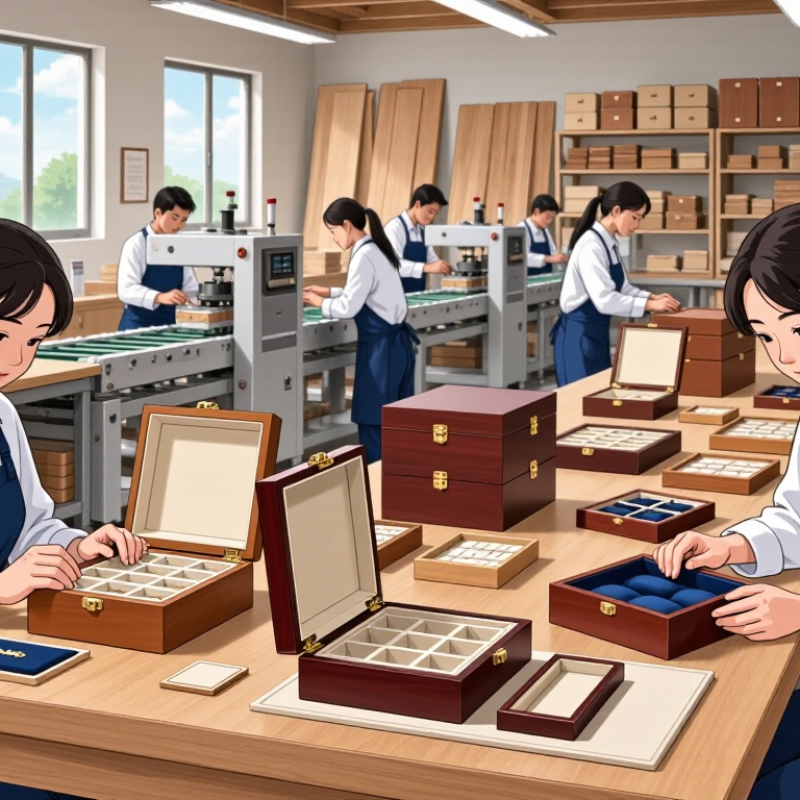
China’s wooden jewelry box manufacturing industry is defined by specialized production, flexible sourcing, and strong finishing capabilities. Many factories combine wood cutting, carving, sanding, painting, and hardware assembly under one roof. This structure helps buyers control quality and reduce communication delays.
From practical supplier evaluations, material selection is an early quality signal. Solid wood offers a warmer grain, while plywood can improve stability and cost control. Bamboo is also used for lighter, renewable designs. Moisture testing matters because poorly dried wood may warp during shipping. Small hinges, magnets, and velvet lining need equal attention. A beautiful exterior cannot hide weak construction.
The top manufacturers usually provide clear samples, production drawings, and inspection records. They can adjust dimensions, compartments, surface colors, and packaging for different markets. Experienced suppliers also explain limitations instead of promising everything. That honesty is valuable. No factory is flawless. Some may deliver excellent carving but need stronger packaging controls. Others may manage large orders well but overlook tiny finishing marks. Buyers should review samples, verify production capacity, and request checks before shipment. A supplier’s real expertise appears in consistent details, not impressive photographs.
Leading Types of China Wooden Jewelry Box Manufacturers
Leading Types of China Wooden Jewelry Box Manufacturers
China’s wooden jewelry box manufacturers usually fall into five practical types. OEM factories produce to a buyer’s drawings, dimensions, and packaging rules. ODM suppliers offer ready-made structures with adjustable trays, finishes, and hardware. Craft workshops focus on hand assembly, carved details, and small batches. Large-scale factories prioritize repeatability, automated cutting, and stable delivery. Eco-focused manufacturers use certified timber, water-based coatings, and recycled packaging.
Demand supports this variety. Grand View Research reported that the global jewelry market was valued at about USD 353 billion in 2023. Its forecast also indicates continued growth through 2030. This does not measure jewelry boxes directly, but it signals expanding demand for storage and presentation products. A factory serving premium jewelry may therefore provide velvet interiors, brass-tone hinges, and fitted ring rolls. A mass-market supplier may use rubberwood, plywood, or engineered panels to control cost.
Look closely at factory evidence.
The best type depends on the project. Request material certificates, coating specifications, moisture-control procedures, and production samples. The International Trade Centre’s Trade Map shows China remains a major global exporter across furniture and related manufactured goods categories. Export strength helps, but it does not guarantee careful workmanship. I have seen attractive samples hide uneven lacquer, loose hinges, or inaccurate compartments. Buyers should inspect batch consistency, not only photography. A useful audit includes edge sanding, odor checks, lid alignment, and carton-drop testing. Some suppliers still need stronger environmental documentation. That gap deserves honest attention.
Manufacturing Standards, Customization, and Quality Control
China’s wooden jewelry box manufacturers vary widely in production discipline and technical capability.
Reliable suppliers usually follow documented material, machining, finishing, and inspection procedures. Buyers should ask for wood species, moisture-control methods, coating specifications, and packaging standards. A clear process matters more than attractive showroom photographs.
Customization
Customization often covers dimensions, compartments, hinges, locks, lining, engraving, and surface color. Detailed drawings reduce costly misunderstandings.
Sample Testing
A sample should confirm more than appearance. It should test lid alignment, hinge movement, drawer clearance, odor, and lining adhesion. Small details matter.
Quality control should continue from material intake to final packing.
Inspectors can check wood moisture with a meter, measure key dimensions, and review finish consistency under bright light. Drop testing and repeated opening tests may reveal weak corners or loose hardware. A polished sample can mislead. Production batches sometimes show color variation, especially with natural wood.
No process is flawless. Even experienced manufacturers may need corrective action after inspection. Buyers should request inspection records, defect limits, traceability labels, and a practical replacement policy. Third-party testing can add confidence when export requirements are strict, but it cannot replace clear communication or factory-level supervision.
How to Select the Right Chinese Wooden Jewelry Box Manufacturer
Choosing the right Chinese wooden jewelry box manufacturer requires more than comparing online photos and low prices. Inspect the factory’s workshop, production records, and quality control process. Ask which wood species they use, how moisture is measured, and whether the surface finish is consistent. A reliable supplier should provide material samples, clear specifications, and recent inspection photos.
Request a pre-production sample before confirming bulk manufacturing. Check the hinge alignment, drawer movement, magnet strength, lining, and box corners. Test it. Place several pieces inside and examine how they fit after closing. Small defects often appear around edges or engraved areas. Confirm the manufacturer’s minimum order quantity, sampling fees, lead time, packaging method, and replacement policy in writing. Do not guess.
Experience matters during communication. A capable manufacturer should explain technical limits instead of promising everything. Ask how they manage color differences between wood batches and how they protect boxes from humidity during shipping. Certifications for timber sourcing, workplace practices, or product safety may also support your evaluation, depending on the destination market. Still, documents alone are not enough. Arrange independent pre-shipment inspection when order value is significant. A checklist helps, but it can miss details. Recheck critical dimensions yourself. Suppliers that answer slowly, avoid video inspections, or change specifications repeatedly deserve caution, even when their quotations look attractive.
This 100-point procurement scorecard highlights the main factors for selecting a Chinese wooden jewelry box manufacturer. Material traceability and workmanship receive the highest weighting because they directly affect product quality, durability, and consistency. Buyers can adjust the weights according to their project requirements.