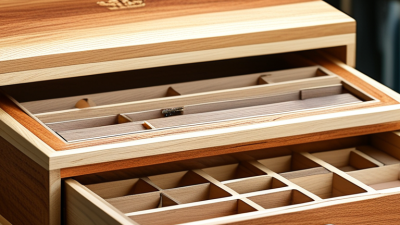
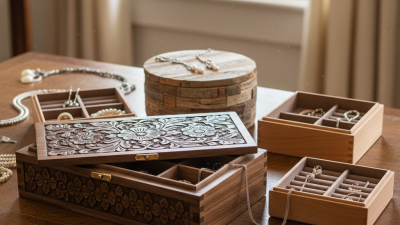
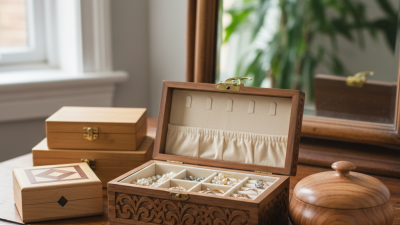
Choosing a Woodwork Jewelry Box for international trade involves more than admiring its appearance. Buyers must examine materials, construction, finishing, packaging, and supplier reliability. A beautiful box can still disappoint if its hinges loosen, its lining sheds fibers, or its dimensions differ from the product sheet.
This guide presents ten practical buying tips for global buyers. It considers solid wood, engineered wood, veneer quality, surface treatments, compartments, locks, and interior protection. Close attention should also go to moisture control, odor, sharp edges, and consistent workmanship across production batches. These details become visible when a box travels through changing climates or reaches a customer’s hands.
Ask for clear specifications, current product photographs, and samples before approving larger quantities. Request information about wood origin, coating safety, packaging tests, and quality inspections. Reliable suppliers should answer directly and provide records that match the actual product. Regional import rules may differ, so professional customs or compliance advice remains valuable.
Small details matter.
A sample may look excellent under showroom lighting yet reveal uneven staining near the hinges. That possibility deserves honest consideration. No checklist is perfect. Still, disciplined evaluation reduces avoidable costs, damaged shipments, and customer complaints. The following tips are designed to support informed purchasing decisions while balancing craftsmanship, price, durability, and responsible sourcing. They are useful for retailers, distributors, hospitality buyers, and private-label businesses seeking dependable wood jewelry storage for international markets.
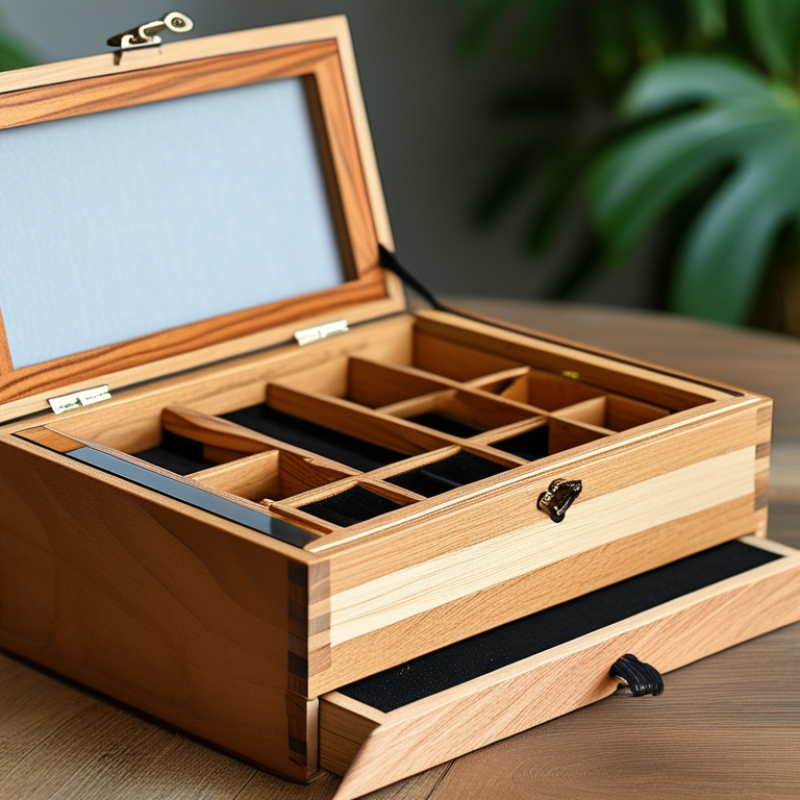
Before choosing a woodwork jewelry box, define what it must hold. A buyer with ten rings needs different storage than a retailer handling mixed collections. Measure the largest item, including watches, necklaces, and earrings. Record the preferred number of compartments, drawers, and removable trays. A velvet-lined section may protect delicate surfaces, while deeper spaces prevent necklaces from bending.
Tip: Write a storage checklist before contacting suppliers. Include dimensions, wood preferences, finish, lining, lock style, and expected order quantity. Also consider your selling market. Compact boxes reduce shipping volume, but very small compartments may disappoint customers. I have seen attractive designs fail because earrings had nowhere practical to rest.
Buyer requirements should cover quality, packaging, and repeat production. Ask for a physical sample when possible. Inspect drawer movement, hinge alignment, odor, surface smoothness, and corner strength. Request clear measurements and material details in writing. For larger orders, confirm acceptable color variation because natural wood rarely looks identical across every piece.
Tip: Test the box with real jewelry. Open it repeatedly, place a watch inside, and gently move it as shipping might. Photograph weak points. This step feels slow, but it can reveal problems that product images hide. I would also leave room for revision; an early specification may sound complete, yet daily use often exposes one missing detail..getenv
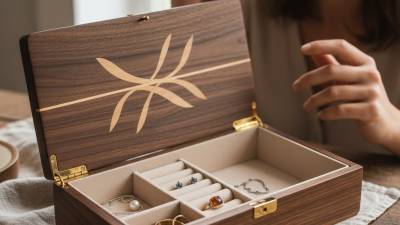
A woodwork jewelry box should feel stable before it looks beautiful. Inspect the lid, base, and dividers for straight grain, tight joints, and consistent thickness. The USDA Forest Products Laboratory’s Wood Handbook places wood’s fiber saturation point near 30% moisture content. Below that point, wood can shrink and swell as humidity changes. Ask the supplier for moisture-control details, especially when shipping across climates. A box made in a dry region may develop gaps in a humid home.
Look closely at dovetail or mortise-and-tenon joints. They should close cleanly, without visible glue pools or uneven corners. Open and close the hinges repeatedly. Resistance, scraping, or side movement suggests weak alignment. Soft lining should fit firmly, but it must not force the lid upward. Small flaws matter. I once saw a box with excellent carving and a warped bottom; decoration could not repair its poor structure. The FAO Global Forest Resources Assessment 2020 reported that about 420 million hectares of forest were converted to other land uses between 1990 and 2020. Responsible buyers should request species details, origin records, and legal sourcing documents. Compare wood density, finish hardness, and joint construction rather than trusting photographs alone. Ask for close-up images and a sample inspection when order volume is significant. A polished surface can hide careless sanding.
Compare common jewelry-box woods by oven-dry density and Janka hardness. Higher density generally indicates better resistance to dents, while higher Janka hardness supports long-term structural durability. These figures are reference values; actual performance also depends on moisture control, joinery, panel thickness, hardware fitting, and surface finishing.
During inspection, look for stable grain, moisture content around 6–10% for typical indoor furniture, tight dovetail or mortise-and-tenon joints, flush-fitting lids, evenly seated hinges, smooth sanding, and a finish without cracks, bubbles, or exposed end grain.
A woodwork jewelry box should protect pieces, not merely display them. Check the interior before judging its finish. Ring rolls should hold rings firmly without squeezing them. Drawers need enough height for earrings, bracelets, and small watches. Soft, non-abrasive lining is essential. Rough timber or exposed staples can create scratches.
Tip: Place a ring, chain, and pair of earrings inside the box. Open every drawer fully. Test whether chains snag between compartments. A practical fit test reveals more than photographs. The 2023 NRF and Appriss Retail report estimated $743 billion in merchandise returns, equal to 14.5% of annual retail sales. Poor protection can contribute to avoidable dissatisfaction, especially during international shipping.
Protection features deserve close attention. Look for strong hinges, a reliable clasp, and rounded interior edges. Removable trays should not slide during handling. A recessed base can reduce movement on a shelf. However, excessive padding may consume useful space. That trade-off is easy to miss. I would also inspect the wood sealant, since humidity changes can affect both timber and jewelry. The World Gold Council reported continued strong global demand for jewelry in its Gold Demand Trends 2023 report, making secure storage increasingly practical for frequent users.
Tip: Shake the closed box gently. Nothing should rattle loudly. Check whether the lid stays open at a comfortable angle. Usability matters daily; a beautiful box becomes inconvenient when compartments are too deep, dark, or difficult to clean.
Verify internal dimensions before approving a sample. A ring box needs clearance for padding, while a necklace box needs depth and stable hinges. Measure the product, insert, lid movement, and outer carton separately. In my sourcing experience, a beautiful box can still fail when the clasp touches the wood. Allow a small tolerance, but do not guess. Request a dimensioned drawing and a physical sample. Customization should specify wood species, stain, engraving depth, lining material, odor control, and color tolerance. One missed detail can affect an entire shipment.
Tip: Test packaging under pressure. Use corner protection, moisture barriers, and a carton that prevents movement. ISO 780 provides recognized handling-mark guidance, while ISTA test procedures help buyers evaluate drop, vibration, and compression risks. The World Bank’s 2023 Logistics Performance Index also shows why transit reliability matters: global logistics performance remains uneven across markets. Ask suppliers for test records, carton measurements, gross weight, and pallet plans. Keep those documents.
Sustainability needs evidence, not attractive wording. The 2024 DHL E-Commerce Trends Report found that 72% of shoppers consider sustainability when purchasing online. Avoid oversized cartons and unnecessary plastic, but protect the wooden surface from humidity and abrasion. Confirm material claims with supplier documents and, where relevant, independent certification. Shipping marks must remain readable after handling. A small oversight matters. I would also repeat the inspection after customization, because engraving, varnish, and lining changes can alter fit. Perfect specifications rarely survive without a final check.
10 Woodwork Jewelry Box Buying Tips for Global Buyers
Comparing suppliers requires more than checking product photos. Ask for workshop images, sample boxes, production capacity, and recent quality records. A polished catalog proves little. Request close-up photos of hinges, drawer joints, lining, and surface finishing. Check the wood species, moisture control, dimensions, and packaging method. In practical sourcing reviews, small differences often reveal larger quality problems. A supplier should answer clearly and provide consistent measurements.
Certifications need careful verification. Ask who issued each document, what it covers, and when it expires. Confirm that the certificate matches the factory, product material, and shipment details. For woodwork jewelry boxes, request traceability information and responsible material documentation when relevant. Do not accept generic PDF files without verification. Compliance expectations may differ by destination, so buyers should confirm current import requirements with qualified local advisers.
Pricing should include product cost, packaging, inspection, shipping terms, and possible replacement costs. The cheapest offer may exclude protective inserts or export-grade cartons. Compare equal specifications before judging value. After-sales support deserves the same attention. Request a written policy for defects, damaged shipments, spare hardware, and response times. Test communication with one detailed question. Slow replies before payment may become slower later. Even experienced buyers can miss hidden costs, especially when samples look better than mass production. A small trial order can expose that weakness early.
| No. | Buying Tip | What to Compare | Practical Specification or Benchmark | Questions for Suppliers | Buyer Action |
|---|---|---|---|---|---|
| 1 | Verify Wood Species and Legality | Wood species, origin, moisture condition, and legal-harvest documentation. | Ask for the scientific name of the wood and a moisture target commonly suitable for finished indoor furniture, generally around 8%–12% depending on destination climate. | Can you provide the wood species, country of harvest, chain-of-custody documents, and moisture-control procedure? | Request a material declaration, sample cross-section, and legal-sourcing evidence before approving production. |
| 2 | Compare Construction Quality | Panel thickness, joint method, hinge installation, drawer movement, and internal layout. | For small jewelry boxes, review walls commonly ranging from approximately 6–12 mm, secure joints, smooth edges, and hinges that open without lateral movement. | Are joints dovetailed, finger-jointed, doweled, or glued? What load and cycle tests are performed on hinges and clasps? | Use an approved sample and a written workmanship standard covering gaps, warping, scratches, and hardware alignment. |
| 3 | Check Finish Safety and Durability | Finish type, color consistency, abrasion resistance, odor, and chemical compliance. | Compare water-based lacquer, oil, wax, or solvent-based coatings; request test results for restricted substances required in the destination market. | Which coating is used? Is the finish compliant with applicable REACH, consumer-product, or packaging requirements? | Approve a physical color chip and finish sample, then include odor, gloss, color tolerance, and surface-defect limits in the purchase order. |
| 4 | Evaluate Certifications and Documents | Forest certification, factory quality systems, social compliance, and product test reports. | FSC or PEFC certification may support responsible-forest claims; ISO 9001 relates to quality management and does not by itself certify product quality or wood legality. | Is the certificate current, issued to the manufacturing site, and applicable to the specific wood material or production scope? | Verify certificate numbers, validity dates, scope, issuing bodies, and whether claims can legally appear on your product packaging. |
| 5 | Compare Customization Capability | Size, compartments, lining, engraving, logo application, packaging, and minimum order quantity. | Custom work often increases tooling, sampling, and approval time; compare the one-time mold or setup charge separately from the unit price. | What are the minimum quantities for standard and customized models? Who owns the tooling and artwork files? | Prepare a dimensioned drawing, material list, artwork file, packaging specification, and sample-approval process. |
| 6 | Analyze the Full Landed Cost | Unit price, tooling, packaging, inspection, freight, duties, taxes, and payment charges. | Indicative ex-factory pricing for simple small wooden jewelry boxes can range from about US$3–15 per unit at medium volume; complex finishes and fittings can cost more. | Is the quotation based on EXW, FOB, CIF, or DDP terms? Which costs are excluded, and how long is the quote valid? | Build a landed-cost worksheet and compare suppliers using the same specifications, quantity, Incoterm, and delivery destination. |
| 7 | Review Production Capacity and Lead Time | Monthly capacity, raw-material availability, sample lead time, production lead time, and peak-season planning. | A typical workflow may require 7–15 days for sampling and approximately 30–60 days for production after final approval, depending on customization and order volume. | What is the confirmed capacity for this specification, and what is the contingency plan for material shortages or production delays? | Obtain a milestone schedule covering artwork approval, prototype, pre-production sample, inspection, dispatch, and estimated arrival. |
| 8 | Assess Packaging and Export Readiness | Individual packaging, carton strength, moisture protection, palletization, labeling, and shipping documents. | Wood packaging used for international shipment may need to comply with ISPM 15 treatment and marking requirements; finished products and packaging should be clearly separated in documentation. | What carton drop tests or protective measures are used? Can you provide packing dimensions, gross weight, and export documents? | Conduct a packaging trial and calculate container utilization, dimensional weight, damage risk, and recycling requirements. |
| 9 | Confirm Quality-Control Procedures | Incoming-material inspection, in-process checks, final inspection, sampling method, and defect classification. | Use agreed inspection levels and acceptance criteria; common quality plans distinguish critical, major, and minor defects rather than relying only on visual approval. | Who performs final inspection? Can the supplier provide inspection records, photos, measurements, and corrective-action reports? | Define measurable tolerances for dimensions, color, warpage, hardware function, lining adhesion, odor, and packaging damage. |
| 10 | Evaluate After-Sales Support | Warranty period, claim response time, replacement policy, spare parts, refunds, and responsibility for shipping damage. | A practical agreement should specify the claim-notification period, evidence required, corrective-action deadline, and remedy for confirmed defects. | How are shortages, concealed damage, finish defects, and repeated quality failures handled? Who pays replacement freight? | Put service levels, warranty exclusions, replacement quantities, credit terms, and escalation contacts into the sales contract. |
Note: Pricing, lead times, certification needs, import rules, and testing requirements vary by wood species, product design, order quantity, destination market, and shipping terms. Confirm all commercial and regulatory details before placing an order.