Top Woodworking Jewelry Box Manufacturers in China?
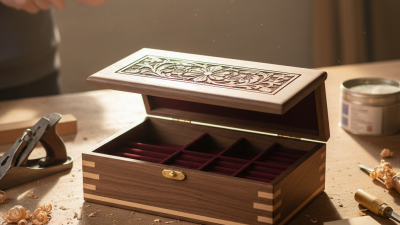
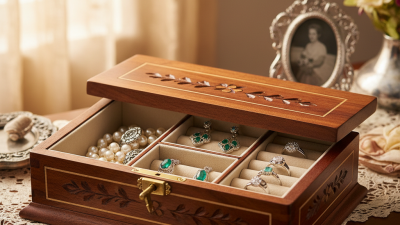
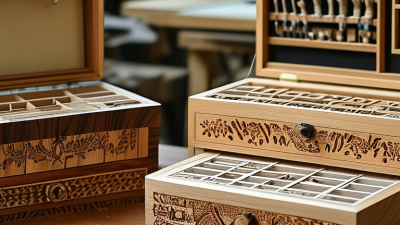
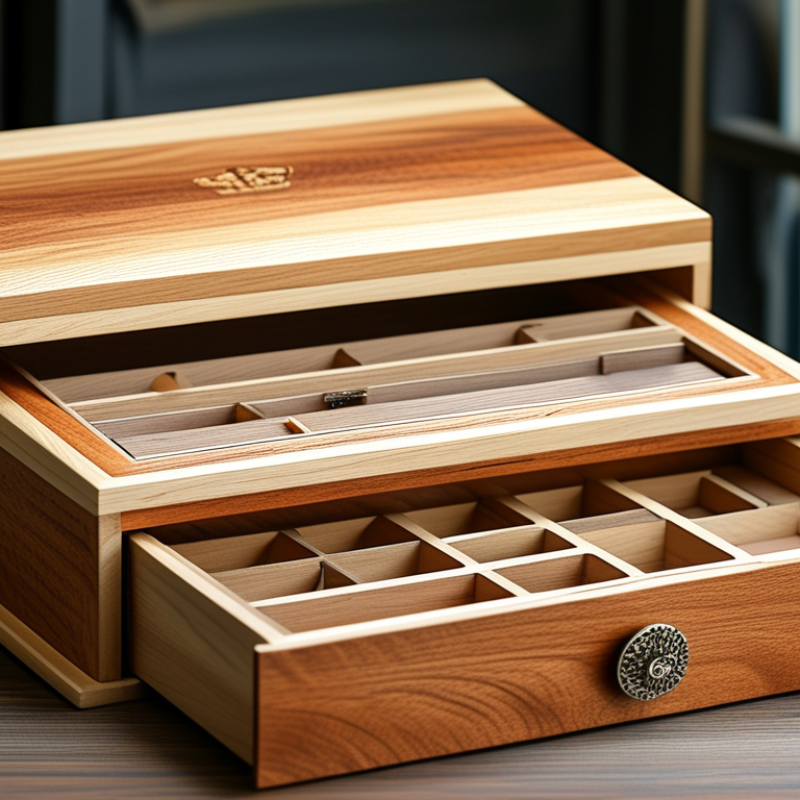
China has become a major sourcing destination for handcrafted and precision-made gift products. A Woodworking Jewelry Box combines cabinetmaking, interior protection, hardware fitting, and visual branding. Its quality appears in small details: smooth drawer movement, aligned hinges, clean corners, and velvet that does not shed fibers.
Market context matters. Grand View Research valued the global jewelry market at approximately US$350 billion in 2023, with continued growth forecast through 2030. That figure measures jewelry, not storage boxes, but it signals sustained demand for attractive presentation and safe home storage. Bain & Company and Altagamma also reported ongoing resilience in luxury consumption during their 2024 luxury market study. These trends support interest in premium wooden packaging and organizers, although the relationship is not always direct.
Selecting among Chinese manufacturers requires more than comparing catalog prices. Buyers should examine wood species, moisture control, finishing safety, production capacity, inspection records, and customization experience. FSC documentation may support responsible material sourcing, while ISO 9001 certification can indicate structured quality procedures. It does not guarantee flawless workmanship. A sample still matters. Open every drawer. Check the lid gap. Smell the finish. Look beneath the lining.
This guide reviews leading Chinese manufacturers using practical sourcing criteria, public company information, and product evidence where available. No ranking is perfect. Factory strengths can change with staff, equipment, and order volume. The best supplier is not always the largest; it is the one that consistently delivers the required design, finish, protection, and communication standard.
China’s Woodworking Jewelry Box Industry: Export Scale and Material Data
China remains a major export base for woodworking jewelry boxes, supported by mature furniture clusters, skilled carving workshops, and efficient port networks. Production is concentrated in coastal provinces, where suppliers can source timber, hardware, packaging, and finishing services nearby. Export orders commonly serve gift retailers, private-label distributors, and lifestyle stores across Europe, North America, and Asia.
Scale varies widely. Large factories handle container-level orders, while smaller workshops specialize in carved details or low-volume customization. Shipment volume often rises before holiday seasons, but annual figures can differ by product classification and customs reporting. The data is not perfectly clean. Buyers should compare export records with factory audits and production samples.
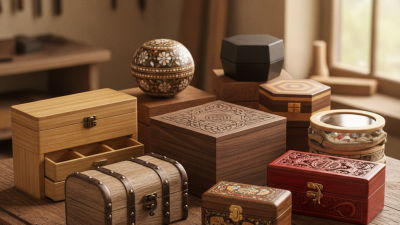
Material selection strongly affects cost, durability, and environmental claims. Plywood and medium-density fiberboard support stable shapes and competitive pricing. Veneered panels create a solid-wood appearance with less raw timber. Solid rubberwood, beech, walnut, and bamboo offer different grain patterns and price levels. Recycled wood content may reduce waste, but its percentage needs written verification. Some suppliers also use water-based coatings, though finish performance should be tested under humidity and repeated opening.
Reliable manufacturers usually provide moisture-control procedures, hardware inspection, and consistent inner lining measurements. Ask for material declarations, test reports, and pre-production samples. A polished catalog is not enough. Small details matter: smooth hinge movement, clean corners, secure magnets, and odor-free interiors. This is where many comparisons become less certain. Availability, timber grades, and export capacity can change quickly.
Key Ranking Criteria: FSC Chain of Custody, ISO 9001, and AQL 2.5
Top Woodworking Jewelry Box Manufacturers in China?
When evaluating woodworking jewelry box manufacturers in China, certification should support factory evidence, not replace it. FSC Chain of Custody shows how certified wood is controlled from approved sources through production and shipment. Ask for a valid certificate, scope, transaction records, and matching product claims. A logo alone proves little. Inspectors should compare timber labels with cutting orders and packing documents.
ISO 9001 indicates a documented quality management system. It should cover purchasing, machining, assembly, finishing, inspection, and corrective action. During a factory visit, check whether workers follow current instructions. Look for signed inspection sheets beside sanding stations, not only framed certificates in reception. Consistent records matter. Still, ISO 9001 does not guarantee flawless jewelry boxes. That distinction is often missed.
AQL 2.5 offers a practical sampling benchmark for production inspections. It does not mean every unit will be perfect. Buyers should define critical, major, and minor defects before sampling begins. Check hinge alignment, velvet adhesion, sharp corners, coating consistency, odor, and lock operation. AQL results become more reliable when inspectors use random carton selection and agreed sample sizes. In my experience, small cosmetic defects are easy to overlook under bright factory lights. I would add a packed-carton review. Packaging damage can hide excellent workmanship—or expose weak protection. The process is not perfect. That is why certificates, records, physical samples, and independent inspection should be considered together.
Factory Comparison: MOQ of 100–1,000 Units and 15–45-Day Lead Times
Top Woodworking Jewelry Box Manufacturers in China?
China’s woodworking jewelry box sector suits both boutique orders and large retail programs. Grand View Research estimates the global jewelry market reached about USD 353 billion in 2023, supporting continued demand for protective, gift-ready packaging. However, market growth does not guarantee consistent factory performance. Wood moisture, veneer matching, and interior fitting can still create delays.
100
units MOQ often possible for standard dimensions and finishes
15–45
days for typical production lead times
500–1,000
units commonly quoted by larger factories
For small launches, a 100-unit MOQ is often possible with standard dimensions and finishes. Custom engraving, velvet inserts, or unusual hinges may raise the minimum toward 300 units. Larger factories commonly quote 500–1,000 units for better unit pricing. Lead times usually range from 15 to 45 days. Standard boxes may ship within 15–25 days, while custom tooling and color approval can extend production beyond 30 days.
Plan carefully.
The 2024 DHL Global Connectedness Report highlights how international supply chains remain exposed to transport disruption and regional delays. Buyers should request a written production schedule, pre-production sample, moisture-control method, and carton drop-test evidence. ISO 9001 certification can support process discipline, but it does not replace physical inspection.
In practice, one overlooked detail—such as a warped lid or loose magnet—can damage an otherwise attractive order.
A 100-unit trial may cost more per piece, yet it reveals weaknesses before a 1,000-unit commitment. Availability is not the same as reliability.
Supplier Verification: BSCI Audits, Sample Defects, and Total Cost Analysis
Choosing a woodworking jewelry box manufacturer in China requires more than attractive catalog photos. In my sourcing work, I request a current BSCI audit report, factory address, production scope, and audit date. A BSCI audit mainly examines working conditions and management practices. It does not guarantee perfect hinges, safe finishes, or consistent carving quality. Verify the report independently. Some documents may be outdated.
Sample inspection should be practical and slightly uncomfortable. Order several boxes from different production batches, not one polished showroom sample. Check lid alignment, magnet strength, velvet adhesion, odor, corner joints, and varnish marks. I once accepted a beautiful sample with a loose hinge. The issue appeared only after repeated opening. That mistake changed my inspection process. Record defects with photographs and measurable limits. Ask the supplier to reproduce the approved sample before mass production.
Total cost analysis must include more than the unit quotation. Add wooden insert costs, packaging, inspection fees, inland transport, export handling, freight, duties, payment charges, and possible rework. Request pricing under the same specifications. A lower factory price can hide thicker packaging needs or higher defect rates. Allow a realistic replacement budget. Estimates still fail sometimes, especially during peak shipping periods. Keep every assumption in writing, including wood species, dimensions, finish, logo method, carton strength, lead time, and acceptable defect levels.