Leave Your Message
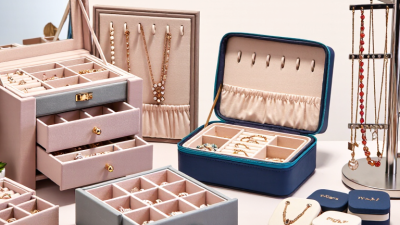
Choosing the best Jewelry Organizer for your store is not simply a storage decision. It is a merchandising decision that affects visibility, security, speed, and customer confidence. A velvet tray may protect delicate rings, while a glass case may present premium pieces more effectively. Each option creates a different shopping experience.
Retail behavior expert Paco Underhill once said, “The first step in selling is getting the customer to stop.” That principle applies directly to jewelry displays. A well-designed Jewelry Organizer should make customers pause, notice details, and imagine wearing the piece. It should also help staff retrieve products quickly without creating tangled chains, missing earrings, or crowded compartments.
Small details matter.
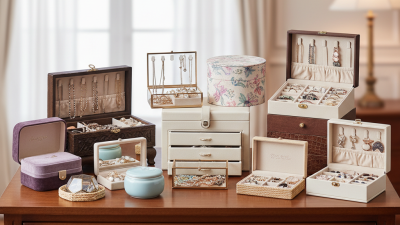
This guide will examine capacity, materials, layout, accessibility, cleaning, and long-term durability. It will also compare countertop trays, drawer systems, wall-mounted organizers, and lockable display solutions. Store size and product type must guide the decision. A boutique selling handmade earrings may need flexible compartments, while a luxury retailer may require polished finishes and stronger security.
There is no perfect organizer for every store. That is worth admitting. Some elegant designs waste valuable counter space. Others are practical but look too ordinary for premium jewelry. The right choice depends on customer habits, staff workflow, product value, and available room. By reviewing these factors carefully, retailers can choose a Jewelry Organizer that supports both daily operations and stronger visual presentation.
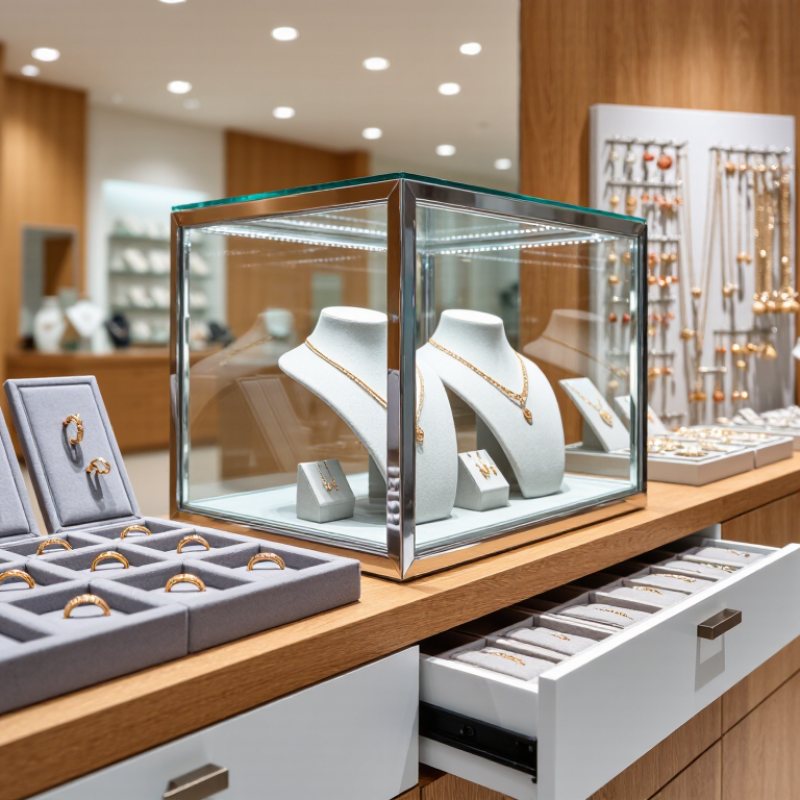
Before choosing a jewelry organizer, measure how your store actually operates. Record item sizes, daily handling, restocking time, and peak traffic areas. A necklace tray needs different spacing from a ring insert or earring card. Measure twice.
The National Retail Federation’s 2023 National Retail Security Survey reported average retail shrink of 1.44% of sales in 2022. This figure supports a practical requirement: storage must improve visibility and control. Use lockable drawers for high-value pieces, shallow trays for fast counting, and separated compartments to prevent scratches. Keep frequently requested items near the sales counter. Store backup inventory in labeled, low-traffic cabinets.
Display height matters too. Customers need clear sightlines without touching every piece. Soft lighting can reveal detail, but excessive brightness may make polished metal look harsh. Test organizers with real products during busy hours. Ask staff whether they can identify missing pieces quickly. Small mistakes happen. A beautiful organizer may still waste time if its labels are unclear.
The 2024 Global Powers of Retailing report from Deloitte highlights the continued importance of efficient store operations and customer experience. Apply that principle locally. Track retrieval time for one week, then revise tray positions, spacing, and security levels. Your first layout may be wrong. That is useful evidence, not failure.
| Organizer Type | Typical Capacity | Best Jewelry Categories | Typical Footprint | Display Visibility | Security and Protection | Recommended Store Use | Space Efficiency |
|---|---|---|---|---|---|---|---|
| Countertop Jewelry Tray | Approximately 12–48 compartments, depending on tray size and divider layout. | Rings, earrings, charms, cufflinks, and small accessories. | Usually 30–60 cm wide and 20–40 cm deep. | Excellent Items are visible and easy to compare. |
Felt or velvet lining helps reduce scratches; open construction provides limited theft protection. | Front-counter displays, product demonstrations, and high-turnover items. | High |
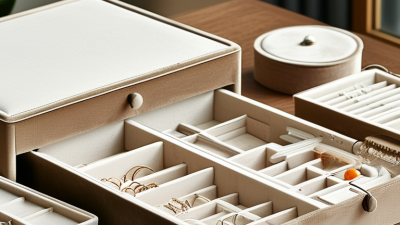
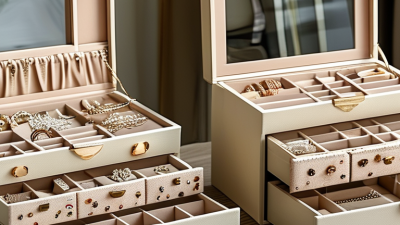
| Stackable Drawer Organizer | Approximately 24–120 compartments across multiple drawers. | Rings, earrings, bracelets, watches, and packaged small goods. | Commonly 30–50 cm wide, 20–40 cm deep, and 8–25 cm high per unit. | Good Products remain organized but are not continuously visible. |
Closed drawers reduce dust exposure and help limit accidental contact; lockable versions offer better control. | Back-of-counter storage, stock organization, and replenishment areas. | Very high |
| Ring Display Stand | Approximately 20–80 rings, based on the number of slots or fingers. | Rings, wedding bands, fashion rings, and adjustable rings. | Usually 15–35 cm wide and 15–30 cm deep. | Excellent Raises individual pieces to eye level. |
Soft-touch surfaces help prevent abrasion; open stands require supervised display. | Featured collections, fitting consultations, and premium product presentation. | Medium |
| Earring Card or Panel Display | Approximately 30–150 pairs, depending on panel height and spacing. | Stud earrings, hoops, drop earrings, and packaged earrings. | Wall panels commonly range from 30–90 cm wide and 40–120 cm high. | Excellent Pairs can be viewed from the front without opening drawers. |
Cards or hooks keep pairs together; panels should be placed in a monitored area. | Wall merchandising, category displays, and large assortments. | High |
| Necklace Bust and Bar Display | Approximately 1–12 necklaces per unit, depending on the design. | Necklaces, pendants, layered chains, and statement pieces. | Individual busts are commonly 10–25 cm wide; multi-bar units may be 30–90 cm wide. | Excellent Displays length, layering, and pendant scale clearly. |
Separate hooks help prevent tangling; open displays need routine security checks. | Feature tables, window displays, and styling areas. | Medium |
| Bracelet and Watch Stand | Approximately 6–30 items, depending on the number of horizontal bars. | Bracelets, bangles, watches, and wider wristwear. | Usually 20–60 cm wide and 15–30 cm deep. | Very good Provides a clear side-by-side view of wristwear. |
Padded bars help protect finishes; individual spacing reduces contact between pieces. | Wristwear sections, coordinated collections, and consultation counters. | Medium |
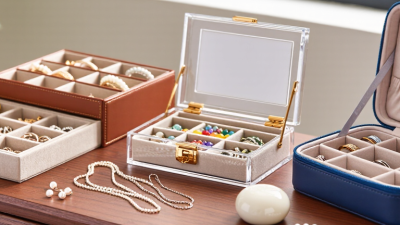
| Lockable Glass Display Case | Approximately 30–200 items, depending on shelf count and product size. | Fine jewelry, high-value pieces, watches, and complete collections. | Commonly 60–180 cm wide, 35–60 cm deep, and 90–120 cm high. | Excellent Products remain visible while protected behind glass. |
Lockable doors, tempered glass, and fixed shelving provide stronger protection against unauthorized handling and dust. | High-value merchandise, controlled selling environments, and focal displays. | Low to medium |
| Portable Travel Jewelry Case | Approximately 20–100 items, depending on compartments and removable inserts. | Small backup inventory, repair items, samples, and mobile sales collections. | Typically 25–45 cm wide, 18–35 cm deep, and 8–20 cm high. | Fair Designed primarily for transport and storage rather than permanent display. |
Zippers, rigid shells, and padded compartments protect items during movement; use additional controls for valuable stock. | Pop-up events, stock transfers, repairs, and temporary selling areas. | High for transport |
| Modular Pegboard Display | Approximately 50–300 items, depending on panel size and accessory spacing. | Earrings, necklaces, bracelets, packaged accessories, and seasonal items. | Common panels range from 60–120 cm wide and 60–240 cm high. | Very good Hooks and shelves can be rearranged as inventory changes. |
Flexible but generally open; use in monitored areas or combine with lockable fixtures. | Changing assortments, compact wall merchandising, and seasonal campaigns. | Very high |
| Backroom Compartment Cabinet | Approximately 100–1,000 labeled compartments, depending on cabinet size. | Packaged stock, spare components, repair orders, and replenishment inventory. | Commonly 60–120 cm wide, 30–60 cm deep, and 90–200 cm high. | Limited Optimized for retrieval rather than customer-facing presentation. |
Doors, labels, dividers, and optional locks support inventory control and dust reduction. | Backroom stock management, cycle counting, and order preparation. | Very high |
Capacity figures are typical planning ranges rather than fixed limits. Actual capacity depends on jewelry dimensions, compartment spacing, packaging, display height, and the amount of clearance required for safe handling. For a balanced store layout, combine open display organizers for customer engagement with closed or lockable storage for inventory control.