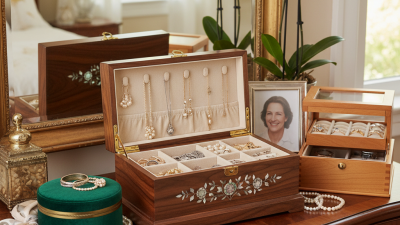
China Top 10 Jewelry Organizer Suppliers for Global Buyers
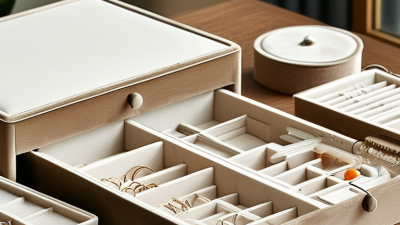
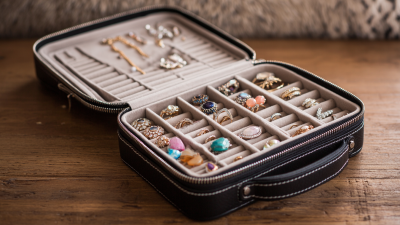
China’s Jewelry Organizer industry has grown beyond simple boxes and trays. Today, global buyers can find velvet-lined drawers, rotating displays, travel cases, and modular storage systems from specialized Chinese manufacturers. This guide examines ten notable suppliers for international sourcing decisions. It focuses on product quality, design capability, factory experience, customization, packaging, minimum order quantities, and communication.
Professional organizer Julie Morgenstern once said, “Organization is not about perfection; it is about efficiency, reducing stress and clutter, saving time and money, and improving your overall quality of life.” Her idea also applies to jewelry storage. A reliable Jewelry Organizer should protect delicate pieces, prevent tangled chains, and make daily selection easier. Strong suppliers understand these practical details. They also control stitching, hardware alignment, lining quality, odor, and surface finishing.
The selected companies are considered through a buyer’s perspective, not only marketing claims. Some may offer excellent OEM support, while others perform better with ready-made collections. Sample inspections remain essential. Product photographs can hide weak hinges, uneven flocking, or fragile clasps. That is an uncomfortable but useful truth. Supplier rankings can also change as factories update equipment, materials, and export services.
This overview helps retailers, wholesalers, jewelry brands, and hospitality buyers compare options more carefully. It also highlights questions worth asking before placing an order. Can the supplier maintain consistent color batches? Does it provide clear packaging specifications? Can quality controls support repeated shipments? No supplier fits every market. The best choice depends on product positioning, budget, sales volume, and customer expectations.
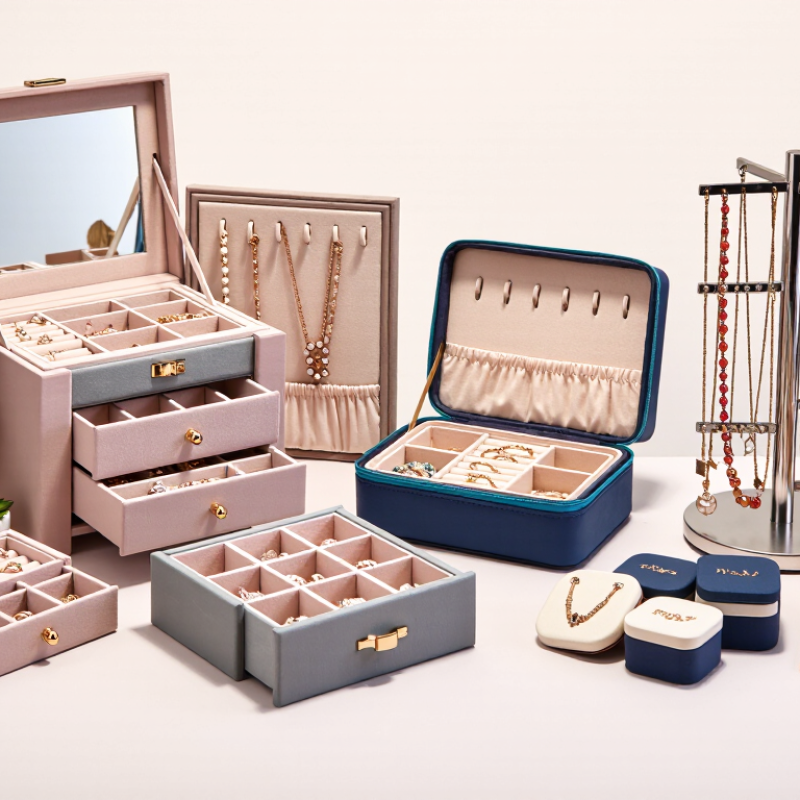
China’s Top 10 Jewelry Organizer Suppliers: 2024 Market Scope and Buyer Criteria
China Top 10 Jewelry Organizer Suppliers: 2024 Market Scope and Buyer Criteria
China’s jewelry organizer sector is expanding with online jewelry sales and gift packaging demand. McKinsey’s State of Fashion: Watches and Jewellery 2024 projects global fine-jewelry growth of 4–6% annually through 2025. Grand View Research also identifies Asia-Pacific as a major jewelry market region. These figures do not measure organizers directly, but they show a strong supporting demand base.
For global buyers, the top ten suppliers should be screened through evidence, not polished catalog images. Check factory experience, monthly capacity, material certificates, and quality-control records. A velvet tray should keep its shape after repeated handling. Hinges must open smoothly. Compartments should fit common ring, earring, and pendant sizes. Ask for pre-production samples, carton drop tests, and clear inspection tolerances.
Cost matters, but it is not the only risk. Low quotations can hide weak lining, unstable color, or excessive packaging waste. Buyers should compare MOQ, lead time, defect rates, and replacement policies in one document. ISO 9001-based procedures can indicate process discipline, although certification alone proves little. This is where many sourcing reviews remain incomplete. Supplier rankings should also consider response speed and honest limitations, not just factory scale. Small sample orders often reveal more than a long presentation.
How the Top 10 Were Ranked Using a 100-Point Supplier Scorecard
China Top 10 Jewelry Organizer Suppliers for Global Buyers
The top ten suppliers were ranked through a 100-point scorecard, not simple online visibility. Our assessment combined sample reviews, factory communication, production evidence, and buyer feedback. Each supplier received 25 points for product quality, including material consistency, smooth edges, stitching, hinges, and protective packaging. A beautiful sample means little if the next shipment changes.
Manufacturing capability carried 20 points. We checked production equipment, workforce experience, capacity records, and quality-control procedures. Customization earned 15 points, covering drawings, colors, dimensions, inserts, logos, and prototype support. Compliance and documentation represented another 15 points. This included material declarations, testing records, export paperwork, and the supplier’s ability to meet destination-market requirements. We did not accept vague promises.
Communication received 10 points. Clear replies, stable contacts, and accurate quotations mattered during real discussions. Delivery reliability earned 10 points, based on lead-time control, packaging plans, and handling of delays. The final 5 points measured overall value, including pricing transparency and long-term service.
This method has limits. Supplier conditions can change after an audit. A factory may perform well on samples but struggle during peak seasons. We also reduced scores when evidence was incomplete, even when the product looked impressive. That choice may exclude capable suppliers. Still, it makes the ranking easier to inspect and repeat. Global buyers can apply the same scorecard, request fresh samples, and verify critical claims before placing a large order.
Supplier Comparison by MOQ, OEM Lead Time, Capacity, and Export Markets
For global buyers, the top ten jewelry organizer suppliers should be compared through measurable purchasing data, not catalog appearance. Statista Market Insights estimated global jewelry revenue at roughly US$369 billion in 2024, increasing demand for attractive, protective storage. A practical supplier screen compares MOQ, OEM lead time, annual capacity, and export destinations. Typical MOQs range from 300 to 1,000 pieces for standard organizers, while customized materials may require 1,000 to 3,000 pieces. OEM sampling often takes 7–15 days. Bulk production usually needs 25–45 days after approval.
Capacity needs verification. Ask for monthly output, machine lists, staffing levels, and recent inspection records. A supplier claiming 100,000 units monthly should show production evidence. Export markets also reveal experience. Suppliers serving North America, Europe, Southeast Asia, and the Middle East may understand different packaging, labeling, and quality expectations. UN Comtrade data confirms China’s strong position in global exports of household storage and textile articles, but product classification can be broad. Treat it carefully.
From sourcing experience, low MOQ often means higher unit costs or fewer material choices. Faster lead time may reflect unused capacity, not efficiency. That part deserves reflection. Buyers should request a signed specification sheet, pre-production sample, carton test, and shipment history. The comparison is not perfectly clean; reported capacity and OEM timing still require independent factory checks.
China Jewelry Organizer Supplier Benchmark
Anonymized industry benchmarks for global buyers comparing MOQ, OEM lead time, annual capacity, and export-market reach.
The benchmark uses four anonymous supplier tiers rather than company or brand names. MOQ is measured in pieces per order, OEM lead time in calendar days, annual capacity in million pieces, and export-market reach by the approximate number of countries served. Figures should be confirmed with suppliers before procurement.
Material and Compliance Benchmark: REACH, RoHS, and CPSIA Standards
China Top 10 Jewelry Organizer Suppliers for Global Buyers
Material and Compliance Benchmark: REACH, RoHS, and CPSIA Standards
Global buyers should evaluate jewelry organizers beyond appearance and price. A velvet tray may contain synthetic fibers, metal fittings, dyes, and adhesive layers. Each material needs a clear specification and traceable sourcing record. REACH checks chemical risks, including restricted substances and SVHC obligations, while RoHS usually concerns electrical and electronic products. Therefore, RoHS may not apply to a basic jewelry box without electrical components. Confirm the product scope before requesting compliance documents.
CPSIA becomes important when an organizer is designed or marketed for children in the United States. Buyers should review lead and phthalate controls, product testing, tracking information, and age-related labeling. Ask suppliers for recent laboratory reports, bills of materials, coating details, and declarations matching the exact product version. A certificate alone is not enough. I treat it as a starting point, not final proof.
Tips: Request samples from every production batch. Inspect zippers, magnets, painted edges, and glued linings closely. Keep photos and test records together. Small changes can matter. A supplier may replace fabric or adhesive without clear notice, creating a compliance gap. Build written change-control terms into the purchase agreement, and review documents before mass production, not after cartons reach the warehouse.
Global Buyer Fit Matrix: Unit Cost, Incoterms, MOQ, and 6 Sourcing Risks
China Top 10 Jewelry Organizer Suppliers for Global Buyers
A useful buyer matrix compares unit cost, MOQ, Incoterms, lead time, and quality controls. An illustrative quote of $2.80 per organizer may reach $4.10 after packaging, inspection, freight, duty, and destination charges. The lowest factory price is not always the lowest landed cost. Under ICC Incoterms 2020, EXW shifts export handling and transport risk to the buyer, while DDP requires careful duty and tax verification. UNCTAD’s Review of Maritime Transport reports that ships carry over 80% of global merchandise trade by volume, so freight disruption deserves a visible budget line.
MOQ creates a second pressure point. A 1,000-unit minimum may reduce unit cost, but it can trap cash in slow-moving colors or sizes. Six risks deserve written controls: hidden landed costs, inconsistent materials, late production, inaccurate carton dimensions, unclear Incoterm responsibilities, and weak packaging during transit. The World Bank’s Logistics Performance Index 2023 shows major differences in customs, infrastructure, and delivery reliability across markets. Supplier comparisons should therefore include production samples, carton photos, inspection records, and a replacement policy. A spreadsheet alone is insufficient. I have seen “confirmed” lead times change after artwork approval.
Tips: Request three quotations using identical specifications. Ask for FOB and DDP scenarios separately. Test one pilot order before accepting a large MOQ. Check clasp strength, lining thickness, odor, stitching, and barcode placement. Leave 10–15% schedule tolerance. Even experienced buyers miss this.
China Top 10 Jewelry Organizer Suppliers for Global Buyers - Global Buyer Fit Matrix: Unit Cost, Incoterms, MOQ, and 6 Sourcing Risks
Comparative sourcing benchmark for anonymized China supplier profiles
Global Buyer Fit Matrix
| Rank |
Anonymous Supplier Profile |
Primary Production Cluster |
Typical Product Strength |
Indicative Unit Cost
(USD/pc) |
Typical Incoterms |
Indicative MOQ
(pcs/SKU) |
Sample Lead Time |
Mass-Production Lead Time |
Best Buyer Fit |
Buyer-Fit Score |
Material & Compliance Risk |
Quality Consistency Risk |
Plating & Tarnish Risk |
Capacity & Lead-Time Risk |
Tooling & Customization Risk |
Export & Logistics Risk |
| 1 |
Supplier Profile 01
OEM-focused export factory |
Zhejiang |
PU leather cases, travel jewelry boxes |
$2.80–$5.60 |
FOB, FCA, CIF |
500–1,000 |
7–12 days |
25–35 days |
Mid-market brands and subscription boxes |
8.8/10 |
Medium |
Low |
Low |
Low |
Medium |
Low |
| 2 |
Supplier Profile 02
Integrated wood-and-fabric manufacturer |
Jiangsu |
Wooden display boxes, MDF organizers |
$4.20–$9.80 |
FOB, CIF, DDP by quotation |
300–800 |
10–15 days |
30–45 days |
Premium retail and gift packaging |
8.6/10 |
Medium |
Medium |
Low |
Medium |
Medium |
Low |
| 3 |
Supplier Profile 03
High-volume molded-product factory |
Guangdong |
Acrylic, ABS, and plastic modular trays |
$1.60–$4.50 |
FOB, FCA, EXW |
1,000–3,000 |
12–18 days |
35–55 days |
Large-volume e-commerce programs |
8.3/10 |
Medium |
Low |
Low |
Medium |
Medium |
Low |
| 4 |
Supplier Profile 04
Handcrafted wood specialist |
Fujian |
Bamboo, solid wood, and lacquered organizers |
$3.90–$10.50 |
FOB, CIF |
200–500 |
12–20 days |
35–60 days |
Boutique and environmentally positioned retailers |
8.1/10 |
Medium |
Medium |
Low |
Medium |
Medium |
Medium |
| 5 |
Supplier Profile 05
Fashion-accessory packaging supplier |
Guangdong |
Velvet pouches, drawstring bags, gift sets |
$0.45–$2.20 |
FOB, EXW, FCA |
1,000–5,000 |
7–12 days |
20–35 days |
Promotional campaigns and entry-level packaging |
7.9/10 |
Medium |
Medium |
Low |
Low |
Low |
Low |
| 6 |
Supplier Profile 06
Metal-display and hardware supplier |
Zhejiang |
Metal stands, bracelet racks, countertop displays |
$2.10–$6.80 |
FOB, FCA, EXW |
500–1,000 |
10–16 days |
30–45 days |
Jewelry stores and trade-show merchandising |
7.7/10 |
Medium |
Medium |
Medium |
Low |
Medium |
Low |
| 7 |
Supplier Profile 07
Small-batch custom workshop |
Shanghai–Jiangsu area |
Custom inserts, logo boxes, limited editions |
$5.50–$14.00 |
FOB, CIF |
100–300 |
15–25 days |
40–65 days |
Luxury launches and test-market orders |
7.5/10 |
Low |
Medium |
Low |
High |
High |
Medium |
| 8 |
Supplier Profile 08
Recycled-material product line |
Guangdong |
Recycled fabric, paperboard, and molded pulp organizers |
$1.80–$5.20 |
FOB, CIF, DDP by quotation |
500–1,500 |
12–20 days |
30–50 days |
Sustainability-led retailers and corporate gifts |
7.4/10 |
High |
Medium |
Low |
Medium |
Medium |
Medium |
| 9 |
Supplier Profile 09
Private-label organizer assembler |
Yiwu, Zhejiang |
Mixed-material ready designs and private label sets |
$1.20–$4.80 |
EXW, FOB, FCA |
200–800 |
7–14 days |
25–40 days |
Startups, distributors, and rapid product testing |
7.1/10 |
High |
High |
Medium |
Medium |
Low |
High |
| 10 |
Supplier Profile 10
Trading-company-led sourcing network |
Ningbo–Yiwu corridor |
Catalog products, mixed containers, small orders |
$1.00–$5.50 |
EXW, FOB, CIF, DDP |
100–500 |
5–12 days |
20–40 days |
Trial orders and multi-SKU assortments |
6.8/10 |
High |
High |
Medium |
Medium |
Low |
High |
Benchmark assumptions:
Unit-cost ranges are indicative FOB-China RFQ benchmarks for standard jewelry organizers ordered at approximately 1,000 pieces per SKU, excluding tooling, artwork, testing, duties, taxes, and freight. Actual pricing varies by dimensions, materials, hardware, packaging, customization, and order volume.
Risk scale:
Low = generally manageable with standard controls;
Medium = requires documented verification;
High = requires enhanced due diligence, pre-shipment inspection, and contractual controls.