What Are the Best Available Items From China?
China offers a wide range of Available Items, from household organizers and kitchen tools to solar accessories, textiles, electronics, and packaging materials. The strongest choices usually combine stable quality, practical design, clear documentation, and dependable production capacity. Low prices can attract attention, but they do not automatically indicate value.
Quality-management expert W. Edwards Deming said, “Quality comes not from inspection, but from the improvement of the production process.” This principle matters when evaluating Chinese suppliers. A responsible buyer should examine factory experience, material specifications, product samples, testing reports, and quality-control procedures. Certifications should match the destination market. Safety requirements must never be treated as optional.
Small details often reveal more than polished catalog photos. Check the weight of a metal tool, the stitching inside a bag, the smell of plastic, and the strength of a product’s packaging. Ask about minimum order quantities, production timelines, replacement policies, and shipping terms. Written records help prevent misunderstandings.
Some categories deserve particular attention. Reusable household products may offer steady demand. Custom packaging can support growing brands. Energy-saving devices may attract buyers, but technical claims require careful verification. Trends change quickly.
No list is perfect. A product that performs well in one market may fail in another. I may overlook an emerging supplier or underestimate a local preference. Therefore, this guide treats the best Available Items as a starting point, not a final verdict. Responsible sourcing requires samples, independent checks, transparent communication, and respect for all applicable laws.
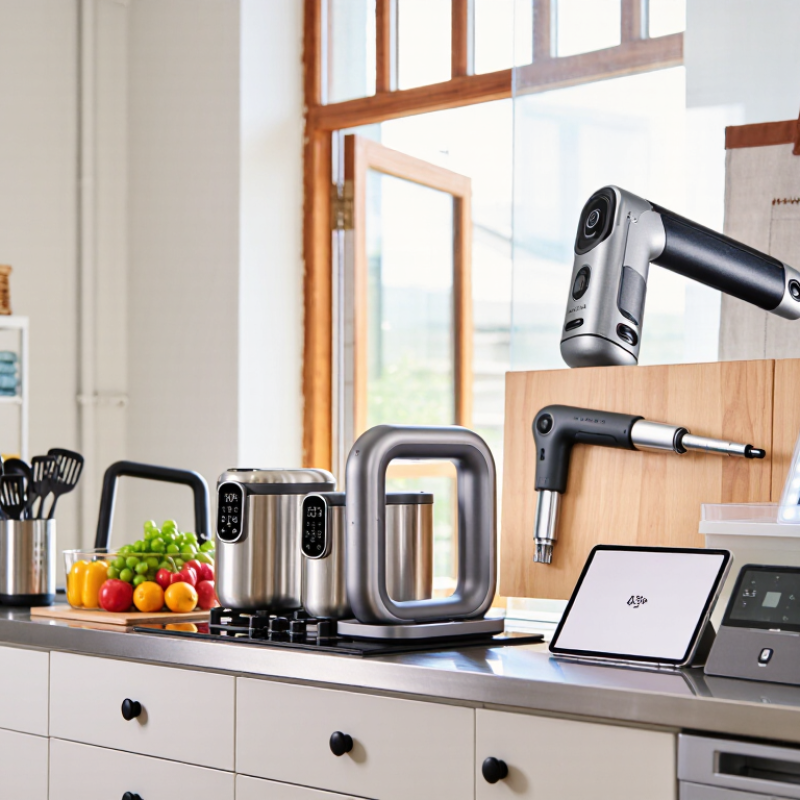
Electric Vehicles: CAAM Recorded 9.5 Million NEV Sales in 2023
What Are the Best Available Items From China? Electric vehicles deserve close attention. The China Association of Automobile Manufacturers reported 9.495 million new energy vehicle sales in 2023. This represented strong year-on-year growth and showed wider public acceptance.
The available choices include battery-electric cars, plug-in hybrids, electric vans, and compact city vehicles. Battery range is important, but it is not the only practical measure. A vehicle with 400 kilometers of tested range may suit daily commuting better than a larger model with poor charging access. Check charging compatibility, battery warranty terms, repair networks, and software support before purchasing. Look closely.
In my evaluation, Chinese electric vehicles often offer useful cabin technology, efficient power systems, and competitive equipment. Some include clear driver displays, fast charging, and spacious rear seating. However, advertised performance can differ from real driving conditions. Cold weather, heavy luggage, and highway speeds may reduce range noticeably. My first impression was too optimistic.
CAAM figures provide a reliable market reference, but sales numbers do not prove that every vehicle is suitable. Buyers should verify crash-test results, local certification, import requirements, and service availability. Battery recycling policies also deserve attention. A lower purchase price may become less attractive when replacement parts take weeks to arrive. Independent inspection remains sensible, especially for used vehicles or unfamiliar exporters.
China's New Energy Vehicle Sales Growth (2019–2023)
China's new energy vehicle sales increased from 1.206 million units in 2019 to 9.495 million units in 2023, according to data from the China Association of Automobile Manufacturers (CAAM). The 2023 total represents the country's highest annual NEV sales level during this period.
Solar Modules: China Added 216.9 GW of PV Capacity in 2023 (IEA PVPS)
What Are the Best Available Items From China?
Solar modules have become one of China’s most important clean-energy products. According to the IEA PVPS Trends 2024 report, China added 216.9 GW of photovoltaic capacity in 2023. That figure represents installed systems, not simple factory shipments. IRENA’s Renewable Capacity Statistics 2024 recorded China’s total solar capacity at about 609.9 GW by the end of that year.
That scale matters. Large production volumes can support competitive pricing, broad product availability, and faster project delivery. However, price alone is a weak buying signal. Buyers should examine module efficiency, temperature coefficients, degradation rates, mechanical-load testing, and independent certification. A detailed factory audit also helps verify material traceability and quality-control procedures.
Performance varies.
The IEA PVPS report also shows how quickly deployment is expanding, but rapid growth can create uneven quality between suppliers. A professional evaluation should compare measured output with laboratory specifications, not only sales brochures. Long-term warranty language deserves careful review, especially for replacement terms and responsible entities. In my experience, the best available module is not always the cheapest one. It is the product that balances verified performance, climate suitability, documentation, and service capacity. Even this approach has limits, because field conditions can differ sharply from test environments.
5G Equipment: MIIT Counted 3.38 Million Chinese Base Stations by 2023
What Are the Best Available Items From China?
China’s 5G equipment sector has reached notable scale. According to the Ministry of Industry and Information Technology, China had 3.38 million 5G base stations by 2023. This figure shows extensive deployment experience, not automatic product superiority. The strongest choices usually include 5G radio units, active antennas, small cells, core-network servers, optical modules, and network-testing instruments.
A reliable evaluation should begin with operating conditions. Check frequency support, power consumption, weather resistance, latency, and software compatibility. A base station installed beside a busy highway faces different demands from one placed inside a factory. Cooling design matters in hot regions. Remote monitoring also reduces unnecessary maintenance visits. Equipment should support recognized security practices and transparent firmware updates. Independent laboratory testing is valuable here.
Price can be attractive, but low purchase cost may hide integration expenses. Spare parts, training, network upgrades, and technical support deserve careful calculation. Some products perform well in controlled trials yet struggle with interference or dense traffic. That weakness is easy to miss. Buyers should request field data, failure rates, warranty terms, and interoperability records. The 3.38 million-station figure offers useful context, but it does not replace local testing. A smaller deployment with stable service may be more practical than a larger installation with uncertain support.
What Are the Best Available Items From China? – 5G Equipment: MIIT Counted 3.38 Million Chinese Base Stations by 2023
Source: Ministry of Industry and Information Technology of China (MIIT) annual telecommunications statistics. Figures are cumulative national totals at year-end; 2019 is reported as approximately 130,000 stations.
| Year |
Cumulative 5G Base Stations |
Approximate Stations Added During Year |
Key Development Indicator |
| 2019 |
130,000 |
— |
Initial nationwide 5G commercial deployment |
| 2020 |
718,000 |
588,000 |
Large-scale network construction accelerated |
| 2021 |
1,425,000 |
707,000 |
Exceeded one million cumulative stations |
| 2022 |
2,312,000 |
887,000 |
More than two million stations in operation |
| 2023 |
3,377,000
(approximately 3.38 million) |
1,065,000 |
National 5G infrastructure reached a new record level |
Lithium-Ion Batteries: China Produced Over 70% of Global Cells in 2023
What Are the Best Available Items From China?
Lithium-ion batteries remain one of China’s strongest industrial products. The International Energy Agency reported that China produced over 70% of global battery cells in 2023. Its manufacturers also supplied most global battery demand, supported by large-scale refining, cell production, and equipment networks. The same IEA report recorded global battery demand near 750 GWh that year, with China representing more than half of total demand. These figures show manufacturing depth, not automatic quality.
For buyers, the best available cells should match the application. Lithium iron phosphate cells suit stationary storage and many commercial vehicles because they offer strong thermal stability. Nickel-based cells provide higher energy density but require stricter temperature control. Check capacity at the stated test conditions, cycle-life data, production dates, and independent safety testing. UN 38.3 documentation matters for transport. So does clear traceability from electrode material to finished cell.
The details can be physical. A reliable supplier should provide sample test records, balanced voltage readings, and measured internal resistance. Ask for testing at different temperatures, not only room temperature. The IEA’s 2024 Batteries and Secure Energy Transitions report also highlights risks from concentrated supply chains. China’s scale is impressive, yet dependence can create delays or limited negotiation power. I would not choose on price alone. Some published cycle claims look optimistic. Independent verification remains necessary.
High-Speed Rail Equipment: China Operated Over 45,000 Kilometers by 2024
What Are the Best Available Items From China?
High-Speed Rail Equipment: China Operated Over 45,000 Kilometers by 2024
China’s high-speed rail network exceeded 45,000 kilometers by 2024, according to national railway statistics. This scale creates a deep supply base for track systems, traction equipment, signaling units, inspection tools, and maintenance vehicles. The International Union of Railways also identifies China as the world’s largest high-speed rail market by operational length. That experience matters when equipment must perform through heat, dust, heavy rain, and freezing conditions.
The strongest purchasing candidates are usually complete systems, not isolated parts. Buyers should check wheel-rail compatibility, power frequency, software interfaces, spare-part access, and local maintenance skills. Technical documents should include test results, failure rates, service records, and lifecycle costs. A low purchase price can become expensive when training or replacement parts are ignored. Specifications may look impressive. Field evidence matters more. Some export data can also be difficult to compare because reporting methods differ.
Tips: Request a pilot installation before a large order. Compare at least three years of operating data. Ask for independent inspection records, cybersecurity controls, and emergency procedures. The World Bank’s railway guidance stresses whole-life planning, while UIC materials highlight safety, interoperability, and maintenance discipline. Do not copy China’s network design blindly. Local curves, climate, regulations, and passenger demand may require different equipment. Reliability is built in context.